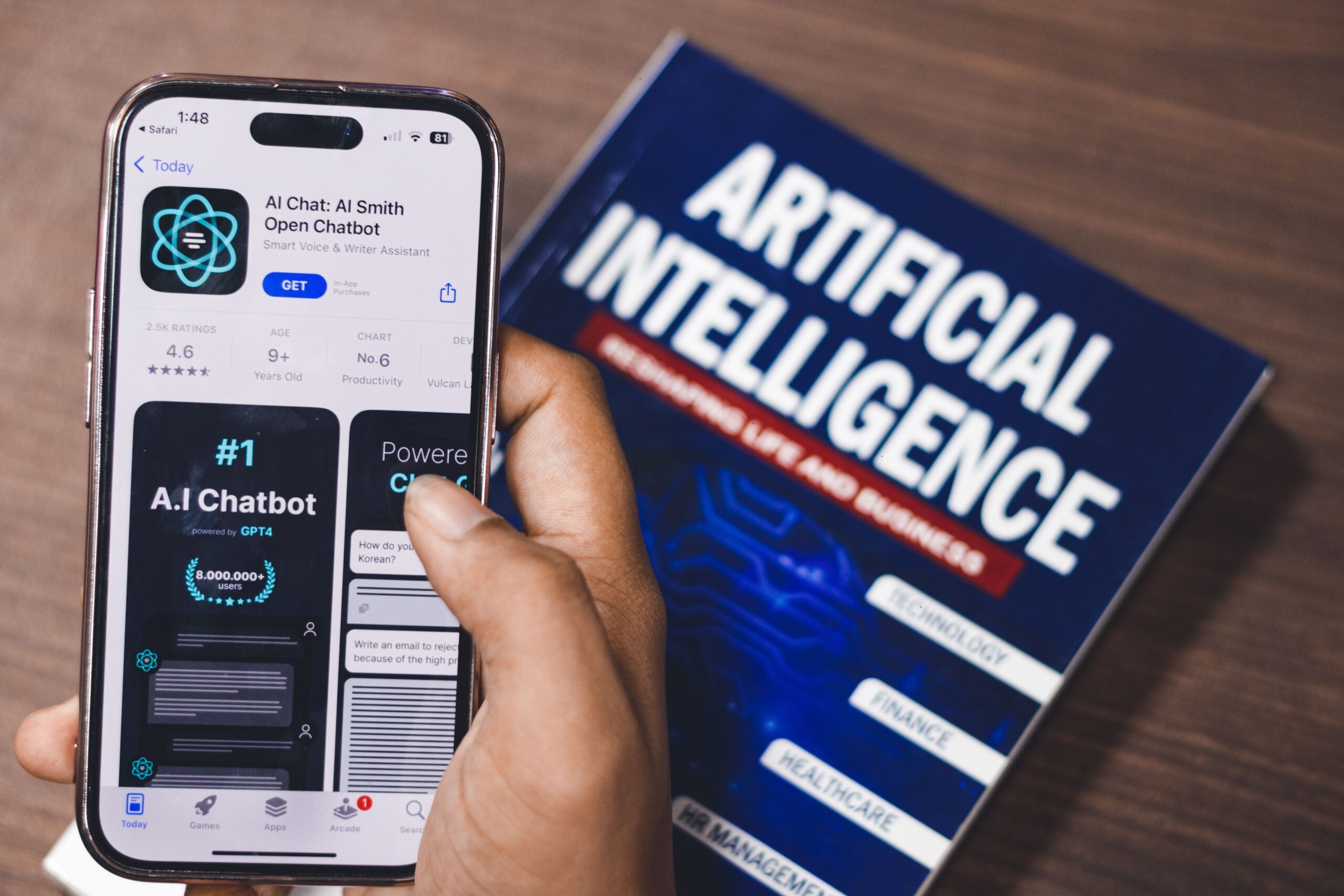
Artificial intelligence is changing how people work, create products, analyze information, and solve business problems. As AI becomes part of more industries, learning practical AI skills can help professionals prepare for new opportunities and adapt to changing job requirements.
The AI Skills to Learn Online for Future Career Growth are not limited to advanced programming. Beginners can learn AI fundamentals, prompt writing, data analysis, automation, and responsible AI. Technical learners can move into machine learning, Python, deep learning, and AI engineering.
The key is to choose skills that match your career goals. You do not need to learn everything about artificial intelligence. Instead, build a focused skill set and learn how to apply it to real problems.
Why AI Skills Matter for Future Careers
AI tools are increasingly being used to automate repetitive work, analyze large amounts of information, support decision-making, and improve productivity. This creates opportunities for people who understand both AI technology and the needs of their industry.
Learning AI can also strengthen existing skills. A marketer can use AI for research and content planning. A data analyst can use AI to accelerate analysis. A developer can use AI-assisted programming tools. A business professional can use AI to organize information and identify patterns.
This means AI education is useful for both technical and non-technical professionals. The strongest learners often combine AI knowledge with existing domain expertise.
Best AI Skills to Learn Online
1. AI Fundamentals
The best place to start is with the fundamentals. Before studying advanced machine learning, learn what artificial intelligence is and how modern AI systems work at a high level.
Important concepts include machine learning, generative AI, neural networks, natural language processing, computer vision, training data, inference, and model evaluation.
You do not need advanced mathematics to understand these concepts at a beginner level. A strong introductory course can give you enough context to use AI tools more effectively and make better technology decisions.
Explore online artificial intelligence courses to find beginner and intermediate learning options from universities and industry organizations.
2. Prompt Engineering and AI Interaction
Generative AI systems respond to instructions, context, examples, and constraints. Learning how to communicate clearly with these systems is therefore a useful professional skill.
Prompt engineering involves creating instructions that help an AI system produce useful and consistent results. Good prompts often specify the task, context, desired format, constraints, and evaluation criteria.
However, effective AI use involves more than writing clever prompts. You should also learn how to check AI-generated information, identify weak outputs, refine instructions, and protect sensitive information.
This skill can be valuable in marketing, research, education, administration, customer service, software development, and many other fields.
3. Python Programming
Python is one of the most useful programming languages for AI and data work. It is widely used for data processing, machine learning, automation, and scientific computing.
Beginners should start with Python basics. Learn variables, functions, loops, lists, dictionaries, files, and error handling. Then move into libraries used for data and AI applications.
If your goal is an AI engineering or data science career, Python can become a core technical skill. If your goal is simply to use AI tools at work, you may only need basic programming and automation knowledge.
Learn Python online through structured courses that can help you build a foundation for later AI studies.
4. Data Analysis and Data Literacy
AI depends heavily on data. That makes data literacy one of the most valuable supporting skills for anyone interested in artificial intelligence.
Learn how to collect, clean, organize, analyze, and visualize information. Spreadsheet skills are useful for beginners. SQL, statistics, Python, and data visualization can provide a stronger foundation as you progress.
Data literacy is also useful for non-technical professionals. It helps you understand reports, evaluate AI outputs, ask better questions, and make evidence-based decisions.
5. Machine Learning
Machine learning is a core area of artificial intelligence. It involves algorithms that learn patterns from data and use those patterns to make predictions or classifications.
Beginner machine learning courses often introduce supervised learning, unsupervised learning, model training, testing, features, and evaluation.
As you advance, you can study regression, classification, clustering, decision trees, ensemble methods, and model optimization.
Machine learning is particularly relevant if you want to work as a data scientist, machine learning engineer, AI engineer, or technical analyst.
6. Generative AI
Generative AI can create or transform text, images, code, audio, and other types of content. Understanding how these systems work can help professionals use them responsibly and effectively.
Learn concepts such as large language models, embeddings, context windows, retrieval-augmented generation, model limitations, and evaluation.
You should also understand that AI-generated content can contain errors. Human review remains important, especially when information affects business decisions, education, finance, or other high-impact areas.
7. AI Automation
AI becomes more valuable when it is connected to real workflows. Automation skills can help professionals reduce repetitive tasks and improve efficiency.
For example, you might learn how to connect an AI tool with a spreadsheet, database, customer support workflow, or project management system.
Start with simple automation. Identify repetitive tasks first. Then determine whether AI can safely improve the workflow.
This skill can be especially useful for people working in operations, marketing, administration, customer service, and small business.
8. AI Ethics and Responsible AI
Technical ability is only one part of AI literacy. Professionals should understand the risks associated with AI systems.
Important topics include privacy, bias, security, transparency, intellectual property, misinformation, and human oversight.
Responsible AI knowledge can help you make better decisions about when to use AI and when human judgment is more appropriate.
Explore artificial intelligence learning resources to compare courses covering AI concepts, applications, and related topics.
AI Skills for Different Career Paths
AI Skills for Marketers
Marketing professionals can learn AI-assisted research, content planning, customer segmentation, analytics, and workflow automation.
AI can complement traditional affiliate marketing skills by helping marketers organize research and generate ideas. However, human review and strategic judgment remain important.
AI Skills for Business Professionals
Business professionals can focus on AI literacy, data analysis, automation, prompt writing, and AI strategy.
These skills can help with research, reporting, forecasting, documentation, and process improvement. You can also combine AI knowledge with your existing business expertise.
AI Skills for Developers
Developers can go deeper into Python, machine learning frameworks, APIs, databases, model deployment, and AI application development.
AI-assisted coding is another area worth exploring. However, developers still need strong programming fundamentals. AI-generated code should be tested, reviewed, and understood before it is used.
AI Skills for Entrepreneurs
Entrepreneurs can learn AI automation, market research, customer support applications, analytics, and content workflows.
AI can support an online business, but technology does not replace business fundamentals. Customer needs, product quality, pricing, marketing, and financial planning still matter.
If you are researching e-commerce models, understanding concepts such as affiliate vs dropshipping can help you compare different approaches. AI can support research and operations, but it does not guarantee passive income or success in a dropshipping business.
How to Learn AI Online Effectively
Start at the Right Level
Do not begin with an advanced machine learning course if you are new to technology.
Start with AI fundamentals. Then add data skills or programming based on your career goal. This creates a more manageable learning path.
Choose Practical Courses
Look for courses that include exercises, projects, quizzes, case studies, or hands-on assignments.
Practical work helps turn knowledge into skills. It also gives you examples to discuss with employers.
Build an AI Portfolio
A portfolio can demonstrate what you can do. Create projects that relate to your target career.
A marketing professional might build an AI-assisted campaign workflow. A data learner could create an analysis project. A programmer could build a simple AI-powered application.
Keep your projects simple at first. Focus on explaining the problem, your approach, the tools you used, and the results.
Keep Learning as AI Changes
AI technology evolves quickly. A course can teach you important foundations, but your learning should continue afterward.
Follow reliable educational resources. Read documentation. Practice with new tools. Review your skills regularly.
Explore Google’s machine learning resources for additional technical learning and practical guidance.
How to Choose an AI Course
Before enrolling, ask several questions.
Does the course match your current skill level? Does it teach skills relevant to your target job? Is the provider credible? Does the course include practical projects? What is the total cost? How much time will you need each week?
Also check whether the course provides a certificate. A certificate can show that you completed training, but it should not be your only career objective.
Focus on what you can demonstrate after completing the course. Employers generally benefit more from evidence of useful skills than from a long list of unrelated certificates.
Common Mistakes When Learning AI
Trying to Learn Everything
AI is a huge field. Trying to master every topic can slow you down.
Choose a specialization that matches your goals. Add new skills gradually.
Focusing Only on Tools
AI tools change quickly. Fundamental skills are more durable.
Learn concepts, problem-solving, data literacy, communication, and evaluation. Then learn specific tools on top of that foundation.
Ignoring Accuracy and Privacy
AI output should be reviewed. Do not assume that generated information is automatically correct.
You should also understand your workplace’s policies before entering confidential or sensitive information into an AI system.
Final Thoughts
The AI Skills to Learn Online for Future Career Growth depend on where you want your career to go. Beginners can start with AI fundamentals, prompt engineering, data literacy, and automation. Technical learners can progress into Python, machine learning, generative AI, and AI engineering.
The most effective strategy is to combine AI skills with existing professional knowledge. Learn the technology, apply it to real problems, and create projects that demonstrate your abilities.
AI is not simply a technology skill. It is becoming a workplace skill. By learning how to use AI thoughtfully, evaluate its output, automate appropriate tasks, and understand its limitations, you can build a stronger foundation for long-term career growth.
Start with one skill today. Build from there. A focused and practical learning path can be more valuable than trying to master everything at once.