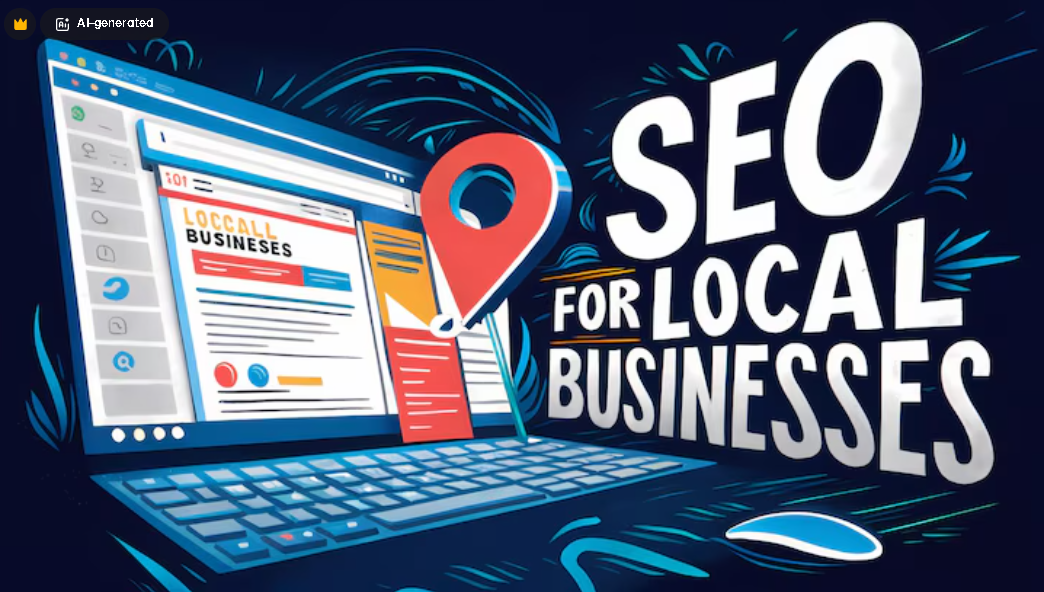
Local SEO is especially valuable for businesses that serve a specific city, neighborhood, or service area. Restaurants, contractors, salons, clinics, retailers, professional services, and local stores can all benefit from a well-planned local search strategy.
The goal is not simply to attract more website visitors. The goal is to attract local customers who are likely to call, visit, request a quote, book an appointment, or make a purchase. This guide explains practical steps you can use to improve local visibility and generate more customer opportunities.
What Is Local SEO?
Local SEO is the process of improving your online presence so your business can appear more prominently in location-based searches. These searches often include a city, neighborhood, “near me,” or another geographic signal.
For example, someone might search for “coffee shop near me” or “plumber in Singapore.” Search engines use several signals to determine which local businesses are relevant.
Google explains that local results are primarily influenced by relevance, distance, and prominence. Improving these signals can increase your chances of appearing when nearby customers search for your products or services. Learn more about how Google local results work.
1. Claim and Optimize Your Google Business Profile
One of the most important Local SEO Tips to Get More Customers is to create and maintain an accurate Google Business Profile.
Your profile can display important information such as your business name, address, phone number, website, hours, services, photos, reviews, and other details. Customers can use this information to contact or visit your business.
Google recommends claiming and verifying your Business Profile and keeping business information accurate and up to date. Manage your Google Business Profile.
Complete as many relevant sections as possible. Choose the most appropriate primary category. Add accurate services and business hours. Keep your phone number and website consistent with the information on your site.
2. Keep Your Business Information Consistent
Consistency matters across your online presence. Your business name, address, phone number, and website details should be accurate wherever customers encounter them.
Check your website, business directories, social profiles, industry listings, and other relevant platforms. Correct outdated information whenever you find it.
Consistency also improves the customer experience. Imagine finding two different phone numbers for the same business. Conflicting information can reduce trust and make it harder for customers to contact you.
3. Choose the Right Local Keywords
Keyword research helps you understand how local customers describe what they need. Focus on phrases that connect your products or services with the locations you serve.
For example, a landscaping company might target phrases related to “landscaping services,” “garden maintenance,” and specific areas it serves.
Do not force location keywords into every sentence. Use them naturally in page titles, headings, service descriptions, and relevant content.
Long-tail keywords can also be valuable. A phrase such as “emergency air conditioner repair in [city]” may attract fewer searches than “air conditioner repair,” but the searcher could have a much stronger buying intent.
4. Create Location-Specific Website Pages
If your business legitimately serves multiple areas, location pages can help explain your services to customers in those areas.
A useful location page should contain original information. Explain what services you provide, who you serve, relevant local details, and how customers can contact you.
Avoid creating dozens of nearly identical pages with only the city name changed. Low-value location pages can create a poor user experience and offer little unique information.
What a Strong Local Landing Page Includes
- A clear service description.
- The relevant location or service area.
- Useful information about the local customer need.
- Accurate contact details.
- Relevant photos or examples of work.
- A clear call to action.
For broader website optimization, you can also read our guide to content marketing strategies that drive organic traffic.
5. Get Genuine Customer Reviews
Reviews can influence customer decisions and contribute to your local reputation. However, the goal should be to earn genuine reviews rather than manipulate them.
Ask satisfied customers to share honest feedback. Make the process simple. You can provide a direct review link after a completed purchase or service.
Never create fake reviews or pay people to post misleading feedback. Reviews should represent real customer experiences.
Respond to reviews professionally. Thank customers for positive feedback and address legitimate concerns respectfully. Your responses are also visible to potential customers, so treat them as part of your public brand communication.
6. Optimize Your Website for Mobile Users
Local searches often happen when people are ready to take action. A customer may search for a business while traveling, shopping, or deciding where to go next.
Your website should therefore work well on mobile devices. Text should be readable. Buttons should be easy to tap. Contact information should be simple to find.
Make important actions obvious. Depending on your business, these might include calling, booking, requesting a quote, getting directions, or purchasing a product.
Google provides guidance for creating mobile-friendly websites through its mobile SEO documentation.
7. Improve Your Website’s Local Content
Local content can help your website become more relevant to the community you serve. Write content that answers questions your local customers actually ask.
For example, a home service company could publish guides about preparing homes for local weather conditions. A restaurant could create content about its menu, ingredients, events, or dining experience.
Local content should be useful first. Do not create pages simply to insert city names into your website.
Useful content can also support broader digital strategies. If you operate an online business, educational content can attract visitors before they are ready to buy.
8. Build Relevant Local Links
Links from other websites can help establish your business’s online authority. For local SEO, relevance is often more valuable than collecting random links.
Consider legitimate opportunities with local organizations, industry associations, chambers of commerce, community groups, suppliers, event websites, and local publications.
For example, sponsoring a genuine community event may result in a relevant business mention. Participating in an industry association may create another legitimate online reference.
Avoid buying large numbers of low-quality links. Focus on relationships and useful resources that make sense for your business.
9. Use Structured Data Where Appropriate
Structured data helps search engines understand information on your pages. Local businesses can use relevant structured data to provide details about their organization, services, location, and other information.
Google’s official documentation explains how structured data can help search engines understand content and make pages eligible for certain search features. Read Google’s structured data introduction.
Use only information that accurately represents your business. Structured data should not be used to create misleading search results.
10. Create an Internal Linking Structure
Internal links connect pages on your own website. They help visitors discover related information and make your site easier to navigate.
For example, a local fitness business could link from a location page to personal training services, membership information, and relevant fitness guides.
Use descriptive anchor text. A phrase such as how to build an e-commerce business tells readers more than a generic “read more” link.
Keep your internal links relevant. Every link should provide a useful next step for the reader.
11. Optimize for “Near Me” Searches Naturally
Many businesses want to rank for “near me” searches. However, you do not need to create awkward pages filled with the words “near me.” Search engines can use location signals to understand local relevance.
Instead, maintain accurate business information and clearly communicate where you operate. Make your address or service area easy to understand.
If you have a physical location, provide accurate directions and location information. If you travel to customers, clearly explain the areas you serve.
12. Improve Local Conversion Rates
Ranking is only one part of local SEO. Once people find your business, you need to give them a reason to take action.
Use clear calls to action. Tell customers what to do next. Depending on your business, that could be “Call Now,” “Book an Appointment,” “Request a Quote,” or “Visit Our Store.”
Display important information near the call to action. Customers may want to know pricing, opening hours, availability, delivery options, or service areas before contacting you.
A strong local SEO strategy connects visibility with conversion. More impressions are useful, but qualified leads and customers are the real goal.
13. Track Your Local SEO Performance
Use data to understand whether your efforts are working. Track website traffic, calls, form submissions, bookings, direction requests, search impressions, and conversions.
Google Search Console can help you understand how your website performs in Google Search. Explore Google Search Console.
Review your Google Business Profile performance as well. Look for changes in customer actions and search visibility.
Do not focus on rankings alone. A ranking improvement that produces no meaningful customer activity may not be as valuable as a smaller visibility gain that produces qualified leads.
14. Common Local SEO Mistakes to Avoid
One common mistake is having incomplete business information. Another is ignoring customer reviews or failing to respond professionally.
Some businesses also create duplicate location pages or use the same generic content for every city. This can provide little value to customers.
Keyword stuffing is another problem. Write naturally. Use relevant terms where they make sense.
Finally, do not neglect your website. A strong Business Profile cannot compensate for a confusing website, inaccurate information, poor mobile usability, or a difficult contact process.
Local SEO for Online Businesses
Not every business needs local SEO. If you operate a location-independent online business, a national or international SEO strategy may be more appropriate.
However, businesses that combine online and offline operations can benefit from both approaches. For example, an e-commerce company with physical stores can use local SEO to attract nearby shoppers while using broader SEO to reach customers elsewhere.
Other online models, including affiliate marketing and a dropshipping business, may focus more heavily on national or global search traffic. If you are comparing business models, our guide to affiliate vs dropshipping provides a useful starting point.
Final Thoughts on Local SEO Tips to Get More Customers
The best Local SEO Tips to Get More Customers focus on accuracy, relevance, trust, and customer experience.
Start by claiming and optimizing your Google Business Profile. Keep business information consistent. Target relevant local keywords. Build useful location pages. Earn genuine reviews and create content that helps your community.
Then improve your website, build relevant local relationships, strengthen internal links, and track customer actions. Do not chase rankings for their own sake.
Local SEO works best when every part of your online presence supports the same goal: helping nearby customers find your business, understand what you offer, trust your brand, and take the next step.
Results can take time, especially in competitive markets. Stay consistent, review your data, and keep improving the customer experience. Over time, a strong local search presence can become a valuable source of qualified traffic and sustainable business growth.
“`
**Meta Description:**
Discover Local SEO Tips to Get More Customers, including Google Business Profile optimization, local keywords, reviews, mobile SEO, local content, links, and conversion strategies.
**SEO Keywords:**
Local SEO Tips to Get More Customers, local SEO tips, local SEO, local search optimization, Google Business Profile, local business SEO, local SEO strategy, local search ranking, local keywords, local marketing, small business SEO, online business, affiliate marketing, passive income, dropshipping business, affiliate vs dropshipping
**Tags:**
Local SEO, Local SEO Tips, Google Business Profile, Local Search, Small Business SEO, SEO Marketing, Local Marketing, Digital Marketing, Online Business, Affiliate Marketing, Dropshipping, Passive Income, Affiliate vs Dropshipping