Choosing the Best SSL Certificate Providers for Business Websites can be confusing. There are many certificate authorities, validation levels, certificate types, and pricing options. The right choice depends on your domain structure, business requirements, budget, and technical setup.
In this guide, we explain how SSL certificates work and compare several established providers. We also cover DV, OV, EV, wildcard, and multi-domain certificates so you can choose an option that fits your website.
What Is an SSL Certificate?
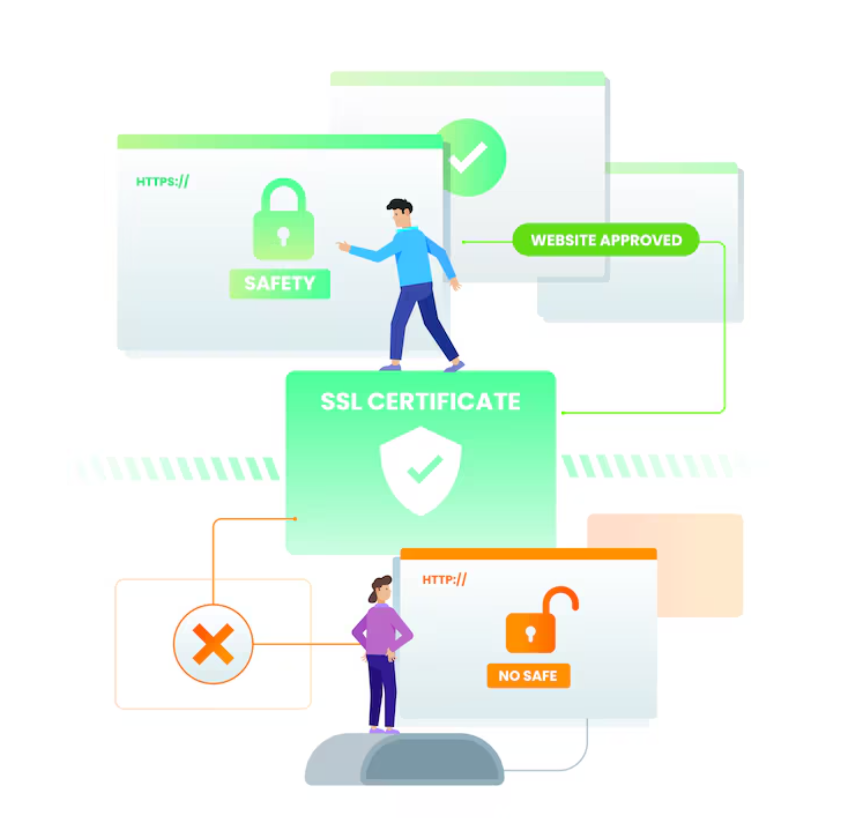
SSL is the older name commonly used for technology that now relies on Transport Layer Security, or TLS. A TLS certificate helps authenticate a website and establish encrypted communication between the browser and server. This enables HTTPS.
When HTTPS is active, information exchanged between the visitor and website is protected against unauthorized interception during transmission. A certificate also helps the browser verify that the connection is associated with the intended domain.
For a business website, HTTPS should cover every page, not only checkout or login pages. It creates a more consistent security experience for visitors and prevents browsers from displaying security warnings on pages served over unsecured HTTP.
For additional background, the CISA cybersecurity resources provide general guidance on protecting online systems and data.
Why SSL/TLS Matters for Business Websites
An SSL/TLS certificate does more than display a padlock in a browser. It forms part of your website’s overall security architecture.
Protects Data in Transit
HTTPS encrypts data exchanged between the browser and server. This is particularly important for login forms, contact forms, customer accounts, and ecommerce transactions.
Encryption does not make a website completely secure. It protects communication in transit, while other controls are needed to secure the application, server, accounts, and stored data.
Builds Customer Confidence
Visitors are more likely to trust a website that uses HTTPS correctly. This matters when customers submit personal details, create accounts, request quotes, or purchase products.
A professional website should therefore treat HTTPS as a basic requirement rather than an optional upgrade.
Supports Modern Website Requirements
Modern browsers expect websites to use secure connections. An HTTPS configuration also supports modern web technologies and helps create a consistent security baseline across your website.
Best SSL Certificate Providers for Business Websites
1. Sectigo — Best Overall for Business SSL Options
Sectigo is a major certificate authority offering a broad range of SSL/TLS certificates. Its portfolio includes Domain Validation, Organization Validation, Extended Validation, single-domain, wildcard, and multi-domain certificates. ([sectigo.com](https://www.sectigo.com/ssl-certificates-tls?utm_source=chatgpt.com))
This variety makes Sectigo useful for businesses with different certificate requirements. A simple business website may need a single-domain certificate, while a company managing several domains may benefit from a multi-domain certificate.
Sectigo also offers certificate management tools. Its Certificate Manager is designed to provide visibility across certificates and automate parts of the certificate lifecycle. ([sectigo.com](https://www.sectigo.com/certificate-manager?utm_source=chatgpt.com))
This can become increasingly important as certificate validity periods become shorter. Sectigo notes that the maximum certificate lifespan is being reduced in stages, with a 200-day maximum beginning March 15, 2026, followed by further reductions. ([sectigo.com](https://www.sectigo.com/certificate-manager?utm_source=chatgpt.com))
Best for: Small businesses, ecommerce companies, organizations managing multiple domains, and businesses that need a wide range of certificate options.
Explore Sectigo SSL/TLS certificates
2. Let’s Encrypt — Best Free SSL Option
Let’s Encrypt is a nonprofit certificate authority that provides free TLS certificates. It is widely used for websites that need standard HTTPS encryption without purchasing a commercial certificate.
Free certificates can be an excellent choice for small business websites that simply need domain encryption. Automated issuance and renewal also make Let’s Encrypt practical for many modern hosting environments.
However, businesses should understand the difference between encryption and identity validation. A free DV certificate can secure the connection, but it does not provide the organization validation associated with OV or EV certificates.
For businesses with technical teams or hosting platforms that support automatic certificate management, Let’s Encrypt can significantly reduce certificate costs.
Learn about Let’s Encrypt free TLS certificates
3. DigiCert — Best for Enterprise Certificate Management
DigiCert is a major certificate authority serving businesses and organizations with digital certificate and PKI requirements. It is particularly relevant to companies managing large certificate inventories and complex security environments.
Enterprise organizations may need certificates for websites, applications, APIs, internal systems, and other infrastructure. In these environments, certificate lifecycle management can be just as important as the certificate itself.
DigiCert’s business-focused approach makes it a strong candidate for larger companies that need centralized management and broader PKI capabilities.
Best for: Enterprises, larger businesses, organizations with complex certificate environments, and teams that need centralized certificate management.
Explore DigiCert TLS and SSL solutions
Types of SSL Certificates
Understanding certificate types is important before you purchase. The right certificate depends on what you need to secure and how much identity verification your business requires.
Domain Validation SSL
DV SSL is the simplest type of certificate. The certificate authority verifies control of the domain before issuing the certificate.
DV certificates are generally suitable for blogs, informational websites, portfolios, and many small business websites that primarily need HTTPS encryption.
Sectigo describes DV certificates as a fast and straightforward option for websites that need reliable encryption. ([sectigo.com](https://www.sectigo.com/ssl-certificates-tls?utm_source=chatgpt.com))
Organization Validation SSL
OV SSL adds organization verification. The certificate authority verifies information about the organization behind the website.
OV can be useful for businesses that want stronger organization identity verification than a standard DV certificate provides.
Extended Validation SSL
EV SSL requires a more extensive validation process. It is designed for organizations that want a higher level of verified identity.
Sectigo offers EV certificates for single-domain and multi-domain requirements and positions them for ecommerce and enterprise use cases. ([sectigo.com](https://www.sectigo.com/ssl-certificates-tls/single-ssl-certificates?utm_source=chatgpt.com))
However, businesses should not assume that EV automatically means stronger encryption than DV or OV. The main difference is the level of identity validation.
Wildcard vs. Multi-Domain SSL Certificates
Wildcard SSL
A wildcard certificate is useful when one domain has multiple subdomains. For example, a business might use separate subdomains for its main website, customer portal, and other services.
Sectigo offers wildcard certificates designed to secure a main domain and its subdomains under a single certificate. ([sectigo.com](https://www.sectigo.com/ssl-certificates-tls?utm_source=chatgpt.com))
Multi-Domain SSL
A multi-domain certificate can protect multiple domain names under one certificate. This can simplify certificate management for businesses with several related domains.
Sectigo’s current multi-domain options can secure multiple domain names with a single certificate, depending on the product and plan selected. ([sectigo.com](https://www.sectigo.com/ssl-certificates-tls?utm_source=chatgpt.com))
How to Choose the Best SSL Certificate Provider
The best provider is not necessarily the one with the lowest advertised price. Look at the complete certificate lifecycle.
Check Certificate Coverage
First, determine how many domains and subdomains you need to secure. A single-domain certificate may be enough for a small website. A company with several properties may need wildcard or multi-domain coverage.
Review Validation Requirements
Decide whether DV, OV, or EV fits your business. For many small businesses, DV provides the encryption they need. Organizations with stronger identity verification requirements may consider OV or EV.
Compare Renewal and Management
Certificate management is becoming more important as certificate validity periods shrink. Businesses with many certificates should consider automation and centralized visibility.
Sectigo’s Certificate Manager, for example, is designed to manage certificate requests, renewals, replacements, and revocations from a centralized environment. ([sectigo.com](https://www.sectigo.com/certificate-manager?utm_source=chatgpt.com))
Consider Support
Technical support can be valuable when a certificate fails validation or an installation causes an HTTPS error. Check whether the provider offers documentation, installation assistance, and support appropriate for your business.
SSL Certificates and Ecommerce Websites
Ecommerce websites have additional security responsibilities because they may process customer accounts, personal information, and transactions.
If you operate a dropshipping business, your store may also connect to payment gateways, inventory platforms, analytics services, and supplier systems. HTTPS should be enabled across the entire customer journey.
For a growing online business, SSL should be combined with secure hosting, strong administrator authentication, backups, software updates, and appropriate website security tools.
You can also read our website security software guide for more ways to protect your business website.
SSL Certificates and SEO
HTTPS is part of a modern website’s technical foundation. Google has also encouraged website owners to use HTTPS as part of a secure web experience.
However, installing an SSL certificate should not be viewed as a shortcut to higher rankings. Search performance also depends on content quality, relevance, technical SEO, page experience, links, and many other factors.
If you use affiliate marketing to monetize content, HTTPS is especially important for maintaining a professional user experience across landing pages and informational content.
Common SSL Mistakes to Avoid
One common mistake is installing a certificate but leaving some website resources on HTTP. Mixed content can cause browser warnings and prevent pages from being fully secure.
Another mistake is forgetting certificate renewal. An expired certificate can trigger browser warnings and make a website appear unavailable or unsafe.
Businesses should also avoid treating SSL as their entire security strategy. SSL protects data in transit, but it does not protect your website from every form of malware, account compromise, vulnerable software, or server attack.
Final Verdict
The Best SSL Certificate Providers for Business Websites depend on your website size, domain structure, identity requirements, technical environment, and budget.
Sectigo is a strong all-around choice for businesses that want a broad selection of DV, OV, EV, wildcard, and multi-domain certificates. Let’s Encrypt is an excellent option for businesses and developers that need free, automated TLS certificates. DigiCert is particularly well suited to larger organizations with extensive certificate and PKI management requirements.
Before purchasing, identify the domains you need to protect and decide which validation level makes sense. Then compare pricing, renewal processes, support, automation, and certificate management tools.
Finally, remember that an SSL certificate is one part of website security. Combine HTTPS with secure hosting, reliable backups, strong authentication, regular software updates, and monitoring. This layered approach can help protect the website that supports your online business, affiliate marketing strategy, ecommerce operation, or long-term passive income.