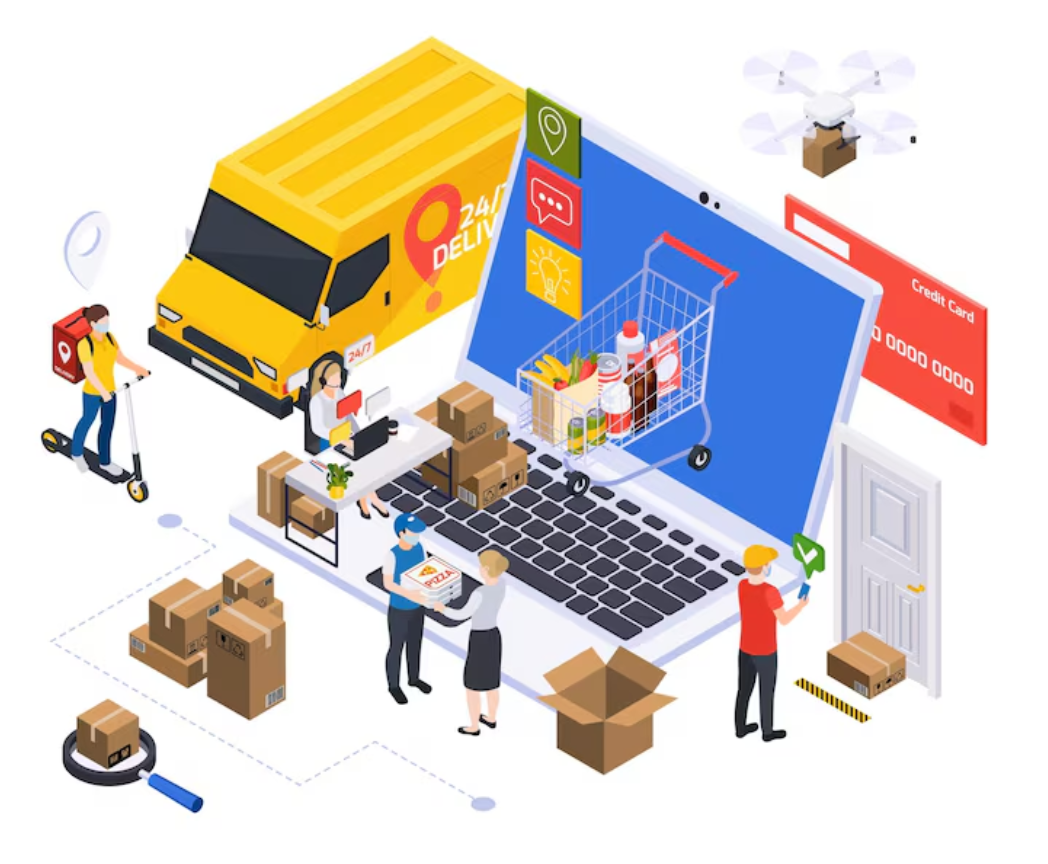
In a traditional online store, the seller usually purchases and stores inventory before making sales. With dropshipping, a supplier generally stores and ships products directly to customers after an order is placed. This can reduce inventory requirements, but it also means the retailer has less direct control over fulfillment and product quality.
This guide explains how to approach a dropshipping business from the beginner stage through more advanced growth strategies. The goal is to build a sustainable online business, not simply launch a store and hope for sales.
What Is a Dropshipping Business?
A dropshipping business sells products without keeping those products in its own inventory. When a customer places an order, the seller passes the order to a supplier. The supplier then prepares and ships the product to the customer.
The seller remains responsible for important parts of the customer experience. These can include marketing, product selection, pricing, website management, customer communication, and handling problems.
The model can have a lower inventory barrier than traditional retail. However, lower upfront inventory requirements do not mean there are no costs. You may still need a website, payment processing, software, marketing, customer support, and business administration.
How Dropshipping Works
- You choose products and list them in your online store.
- A customer places an order and pays your store.
- You send the order details to your supplier.
- The supplier prepares and ships the product.
- You remain responsible for communicating with the customer.
Some e-commerce platforms and supplier applications can automate parts of this process. Shopify’s current dropshipping guidance describes several ways merchants can connect stores with suppliers and forward orders for fulfillment. Explore Shopify’s current dropshipping guide.
Step 1: Choose a Focused Niche
A niche is a specific segment of a larger market. Choosing one can make your marketing more focused and help you understand your customers.
Do not choose a niche only because a product is trending. Research demand, competition, customer complaints, product reviews, and potential profit margins.
Look for products that solve a clear problem or serve a strong customer interest. You should also consider shipping requirements, product durability, return risks, and supplier availability.
Google Trends can be useful for comparing search interest over time. It should not be your only research source, but it can help you investigate whether interest in a topic appears seasonal or persistent.
Step 2: Research Your Competition
Competitor research helps you understand what customers already see in the market. Study competing stores, product descriptions, pricing, website design, shipping information, and customer reviews.
Do not copy competitors. Instead, identify gaps that you can address.
For example, competitors may have confusing product information. You could provide clearer explanations. They may have weak customer support. You could make communication easier. They may target a broad audience while you focus on a specific customer group.
Step 3: Find Reliable Suppliers
Your supplier can directly affect your reputation. A supplier that ships late or provides inconsistent products can create customer complaints even when your marketing is excellent.
Before committing to a supplier, investigate product quality, shipping times, return procedures, communication, pricing, and fulfillment history.
Order samples when possible. A sample lets you evaluate the product and packaging before presenting it to customers. Shopify’s current guidance also recommends reviewing supplier performance and ordering samples to assess quality and consistency.
For more information about finding products and suppliers, see this product sourcing guide.
Step 4: Build a Professional Store
Your store should make buying simple. Visitors should quickly understand what you sell, who the products are for, how much they cost, and how delivery works.
Use clear product titles and descriptions. Include accurate images. Explain important product specifications. Display shipping and return information where customers can easily find it.
Mobile usability matters too. Many shoppers browse from mobile devices, so test your store on different screen sizes before launch.
Platforms such as Shopify provide tools for creating e-commerce websites and connecting stores with dropshipping services. You can review the Shopify commerce platform to understand its current store-building options.
Step 5: Create a Realistic Pricing Strategy
Pricing should account for more than the supplier’s product cost. Calculate your total cost per sale.
Consider supplier charges, payment processing, shipping, advertising, software, refunds, discounts, and other operating expenses. Then compare the resulting cost with the selling price.
A product with a high selling price is not automatically profitable. What matters is the amount left after all relevant costs.
Use bundles or complementary products when appropriate. This can increase average order value without relying entirely on higher individual product prices.
Step 6: Create Product Pages That Convert
A strong product page answers the questions a customer is likely to ask before purchasing.
Explain the product’s main benefits. Include important specifications. Clarify who the product is designed for. Provide accurate shipping and return information.
Avoid exaggerated claims. Marketing should accurately represent the product and the experience customers can reasonably expect.
The U.S. Federal Trade Commission states that advertising claims should be truthful, non-deceptive, and supported by appropriate evidence. Its guidance also covers online advertising, reviews, endorsements, and shipping-related representations. Review the FTC advertising and marketing guidance.
Step 7: Build an Organic Traffic Strategy
Paid advertising can help businesses reach potential customers, but organic traffic can become a valuable long-term asset.
Create useful articles, buying guides, tutorials, product comparisons, and answers to customer questions. Focus on topics that are closely connected to your products and audience.
Use descriptive page titles, helpful headings, relevant internal links, and natural keywords. Avoid publishing large amounts of thin content simply to target more search terms.
Google provides specific documentation for e-commerce websites. Product, Organization, BreadcrumbList, Review, and other structured data types can help search engines better understand relevant information on e-commerce pages. Learn about Google’s e-commerce structured data guidance.
Step 8: Use Social Media and Content Marketing
Social media can help demonstrate products and introduce your brand to new audiences. Instead of posting only sales messages, create useful content.
Show product demonstrations, answer questions, explain common problems, and share behind-the-scenes content. Short-form video can be particularly useful for products that benefit from visual demonstrations.
Content marketing can also support an affiliate marketing strategy. However, affiliate marketing and dropshipping are different models. Understanding affiliate vs dropshipping can help you decide which approach fits your goals.
Step 9: Build Trust With Customer Service
Customer service is a major part of dropshipping. Customers generally do not care which supplier ships their package. They care whether their order arrives as promised and whether someone helps when something goes wrong.
Set realistic delivery expectations. Respond clearly to questions. Provide tracking information when available. Create a straightforward return and refund process.
If your supplier makes a mistake, communicate with the customer and work toward a reasonable solution. Your store’s reputation is your responsibility, even when fulfillment is handled elsewhere.
Step 10: Measure Your Business Performance
Once your store is operating, use data to understand what is happening.
Track traffic, conversion rate, average order value, customer acquisition cost, refund rate, repeat purchases, and profit margin. These metrics can reveal problems that revenue alone may hide.
For example, high traffic with few purchases may indicate weak product pages or poor audience targeting. Strong sales with low profit may indicate that your pricing or advertising costs need attention.
Advanced Strategy: Build a Brand, Not Just a Store
Beginners often focus on finding a product. Experienced operators focus on creating a recognizable customer experience.
A strong brand can include consistent design, useful content, reliable service, clear communication, and a specific customer promise. It becomes harder for competitors to compete with you solely on price.
Consider developing product collections around a specific customer need instead of filling your store with unrelated items. This can make your website easier to understand and improve cross-selling opportunities.
Advanced Strategy: Improve Supplier and Fulfillment Operations
As order volume grows, fulfillment becomes more important. Monitor stock availability, delivery times, product quality, and customer complaints.
Do not depend on one supplier without considering the risks. If an important product becomes unavailable, your sales can suffer. Having reliable alternatives may improve resilience.
Review supplier performance regularly. A supplier that was excellent when you had ten orders may need to be reassessed as volume increases.
Can Dropshipping Create Passive Income?
Dropshipping is sometimes marketed as passive income, but that description can be misleading. A store may automate some tasks, but successful operations still require monitoring.
You need to manage customer questions, supplier relationships, marketing, product selection, pricing, refunds, and website performance. Automation can reduce repetitive work, but it does not eliminate business responsibility.
A more realistic goal is to build systems that make your business more efficient over time.
Common Dropshipping Mistakes to Avoid
New sellers often make avoidable mistakes. One is choosing products without researching demand. Another is selecting suppliers based only on low prices.
Other common problems include unrealistic shipping promises, weak product descriptions, poor customer service, and spending heavily on advertising before testing an offer.
Avoid making unsupported claims about product performance. Do not use fake reviews or misleading discounts. Honest marketing helps protect customer trust and supports a more sustainable brand.
How to Move From Beginner to Expert
Becoming more advanced does not mean adding more products or spending more money. It means making better decisions.
Beginners learn how the model works. Intermediate sellers improve product selection, marketing, conversion rates, and supplier relationships. More experienced operators focus on branding, retention, automation, profitability, and operational efficiency.
Keep testing one variable at a time when possible. Study your results. Keep what works and remove what does not.
Final Thoughts on the Dropshipping Business Guide: From Beginner to Expert
The Dropshipping Business Guide: From Beginner to Expert comes down to building a customer-focused system. Choose a focused niche. Research demand. Find reliable suppliers. Create a professional store. Price products carefully and market them honestly.
Then improve the business using real data. Strengthen your product pages. Build organic traffic. Develop useful content. Improve customer service. Monitor suppliers and fulfillment.
Dropshipping can provide a practical way to test e-commerce ideas without holding traditional inventory. However, competition is significant, and low inventory requirements do not guarantee profitability. Shopify’s current 2026 guidance similarly notes that the model can be accessible while competition can limit margins.
If you treat dropshipping as a real business rather than a shortcut to passive income, you can make better decisions. Focus on solving customer problems, delivering a reliable experience, and building an online business that can improve over time.
For a broader comparison of online business models, explore our guide to affiliate vs dropshipping. You can also learn more about building an e-commerce operation with our e-commerce business guide.
“`
**Meta Description:**
Learn how to build a dropshipping business from beginner to expert with practical tips for niche research, suppliers, pricing, marketing, SEO, customer service, and scaling.
**SEO Keywords:**
Dropshipping Business Guide: From Beginner to Expert, dropshipping business, how to start dropshipping, dropshipping guide, dropshipping for beginners, dropshipping business model, dropshipping suppliers, dropshipping store, e-commerce business, online business, passive income, affiliate marketing, affiliate vs dropshipping, product sourcing, dropshipping marketing
**Tags:**
Dropshipping, Dropshipping Business, Dropshipping Guide, E-commerce, Online Business, E-commerce Business, Product Sourcing, Dropshipping Suppliers, Digital Marketing, Affiliate Marketing, Passive Income, Affiliate vs Dropshipping, Entrepreneurship